
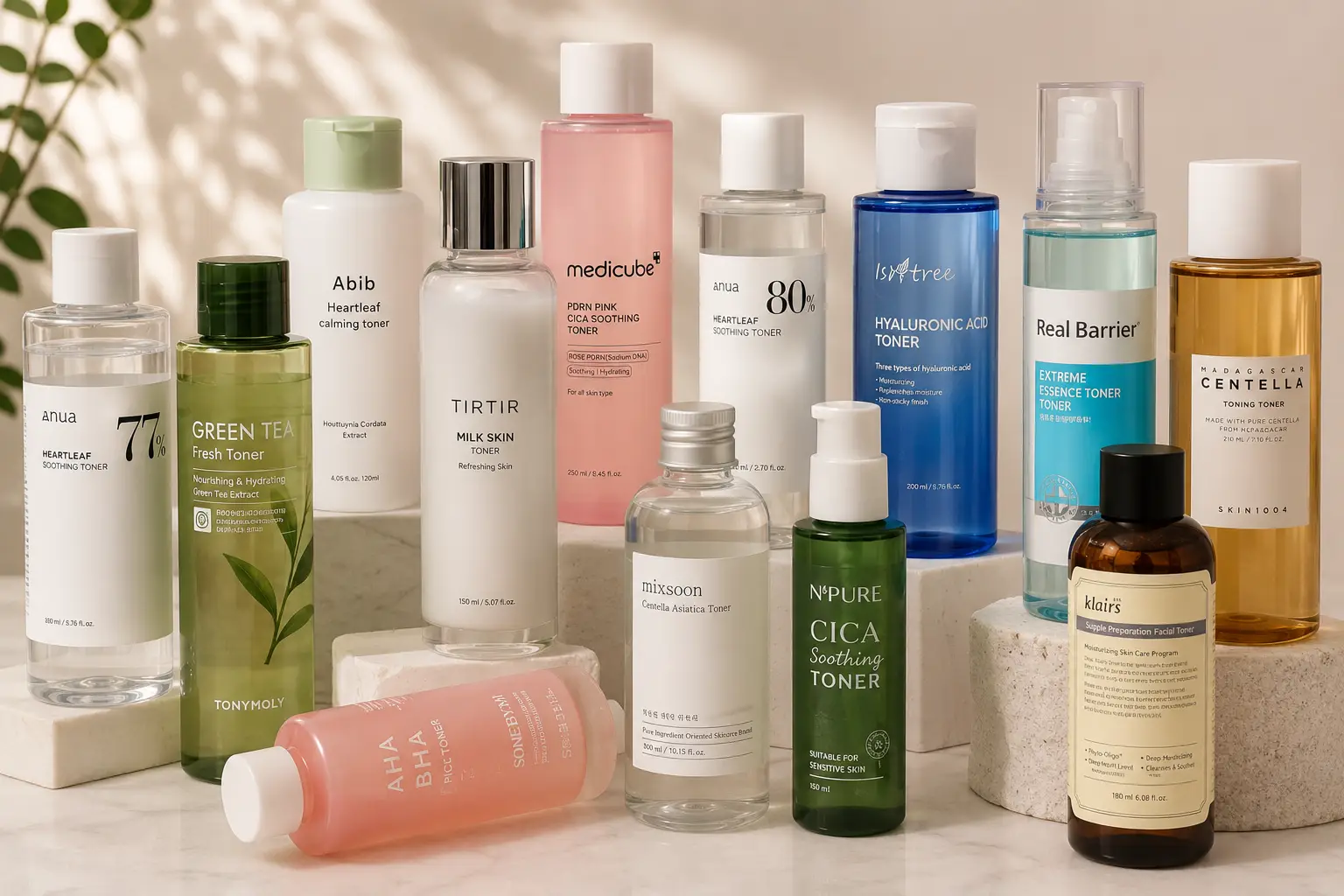
Are Toners Necessary for Healthy Skin? 💧✨
Let’s talk about toners. Walk into any skincare aisle and you’ll find cleansers, serums, moisturizers, masks, oils—and plenty of toners. But that raises an important question: Do you really need a toner for healthy skin?
The short answer is not necessarily.
A toner can be a useful addition to your routine, especially when it contains ingredients that address a specific skin concern. However, toner isn’t an essential step for everyone. Dermatology guidance generally emphasizes keeping your routine simple and choosing products based on your skin type and goals. Cleveland Clinic describes toner as an optional step, while the American Academy of Dermatology emphasizes gentle cleansing, moisturizing, and sun protection as the foundation of skincare.
So, should you add one? Let’s take a closer look.
What Exactly Is a Facial Toner? 🧴
A facial toner is usually a lightweight, water-based product applied after cleansing and before moisturizing or other skincare products.
Older toners were often alcohol-heavy and designed to remove excess oil. These formulas could be drying or irritating for some people. Modern toners are much more diverse and may contain ingredients intended to hydrate, soothe, exfoliate, brighten, or help manage oil.
Today, you may find toners containing ingredients such as:
- Hyaluronic acid
- Glycerin
- Niacinamide
- Aloe vera
- Salicylic acid
- Glycolic acid
- Antioxidants
- Soothing botanical ingredients
Because formulas are so different, the word “toner” alone doesn’t tell you what the product will do for your skin.
6 Things to Know Before Adding Toner to Your Routine

1. Toner Is Optional—not a Must-Have 💕
One of the biggest skincare misconceptions is that everyone needs a toner.
You don’t.
A simple skincare routine can provide excellent basic care without one. Cleveland Clinic recommends a straightforward routine built around essential products and identifies toner as an optional step.
For many people, the foundation of a routine is:
Cleanser → Moisturizer → Sunscreen
During the day, sunscreen is particularly important for protecting your skin from UV exposure.
If your existing routine keeps your skin comfortable, hydrated, and healthy-looking, you don’t need to add another product simply because it’s popular.
The takeaway:
Don’t add toner because you feel like you “should.” Add it because you have a reason for using it.
2. Toner Can Add Extra Hydration 💦
Some modern toners are formulated primarily for hydration.
Instead of leaving your skin feeling tight or dry, hydrating toners can provide lightweight moisture and may contain ingredients such as glycerin or hyaluronic acid. Cleveland Clinic notes that modern toners can help hydrate the skin and prepare it for products applied afterward.
This can be particularly appealing if you enjoy lightweight layers in your skincare routine.
For example:
Cleanser → Hydrating Toner → Serum → Moisturizer → Sunscreen
However, remember that toner isn’t a replacement for moisturizer.
A good moisturizer remains an important part of maintaining comfortable, hydrated skin.
3. Certain Toners Can Target Specific Skin Concerns ✨
Not all toners are created for the same purpose.
Some are formulated with active ingredients designed to address specific concerns.
For example, toners containing salicylic acid may be marketed toward oily or acne-prone skin, while products containing AHAs such as glycolic or lactic acid may help exfoliate the skin.
Cleveland Clinic notes that certain acid-containing toners may help unclog pores and smooth skin texture.
But more active ingredients aren’t automatically better.
Using too many exfoliating products at the same time can lead to dryness and irritation. Cleveland Clinic recommends keeping skincare routines simple because excessive products or irritating combinations can cause problems.
If you’re using an exfoliating toner:
- Start slowly.
- Follow the product directions.
- Don’t automatically combine multiple strong exfoliants.
- Stop if your skin becomes irritated.
- Use sunscreen during the day.
4. The Right Toner Depends on Your Skin Type 🌸
Your friend’s favorite toner may not be the right choice for you.
Dry skin:
Look for hydrating ingredients such as glycerin or hyaluronic acid. Avoid formulas that leave your skin feeling tight or stripped.
Oily skin:
A lightweight toner may feel comfortable. Some formulas containing salicylic acid may help with oil and clogged pores, but they should be introduced carefully.
Combination skin:
You may want a balanced formula that provides hydration without feeling overly heavy.
Sensitive skin:
Keep things gentle. Fragrance and certain active ingredients may cause irritation for some people. Introducing one new product at a time can make it easier to determine how your skin responds.
Mature skin:
A hydrating toner containing ingredients such as antioxidants or humectants may complement a simple routine.
The most important rule is simple:
Choose based on your skin—not on trends.
5. Be Careful With Alcohol-Heavy Toners ⚠️
If you remember the old idea that toner should make your face feel extremely “squeaky clean,” it’s time to rethink it.
That tight, dry feeling isn’t necessarily a sign that a product is working.
Some traditional alcohol-based toners can strip natural oils and may be irritating, particularly for dry or sensitive skin. Cleveland Clinic specifically distinguishes modern hydrating toners from harsher alcohol-based astringents.
If your toner leaves your skin:
- Tight
- Burning
- Flaky
- Red
- Uncomfortably dry
consider stopping it and reassessing the formula.
Healthy skincare should generally leave your skin feeling comfortable—not stripped.
6. A Toner Should Support Your Routine, Not Complicate It 🫧
One of the biggest skincare mistakes is assuming that more products automatically mean better results.
They don’t.
The American Academy of Dermatology recommends keeping skincare routines simple and notes that using too many products can irritate the skin.
If you’re already using a cleanser, serum, exfoliant, retinoid, moisturizer, and sunscreen, adding another active toner may not be necessary.
Instead, ask yourself:
What problem am I trying to solve?
If the answer is hydration, choose hydration.
If it’s excess oil, look for a formula designed for that concern.
If you’re simply looking for another step because social media says you need one, you may be better off keeping your routine simple.
How to Use Toner Correctly 💧

If you decide toner is right for your routine, it’s generally applied after cleansing.
A simple routine could look like:
Morning ☀️
1. Cleanser
Gently wash your face.
2. Toner — optional
Apply a suitable toner according to its directions.
3. Serum — optional
Apply your chosen treatment.
4. Moisturizer
Keep your skin comfortable and hydrated.
5. Sunscreen
Finish with broad-spectrum sunscreen.
Evening 🌙
1. Remove makeup/sunscreen
Start with a suitable makeup remover or cleansing step if needed.
2. Cleanser
Gently cleanse your skin.
3. Toner — optional
Use your toner if it fits your routine.
4. Treatment
Apply your appropriate skincare treatment.
5. Moisturizer
Finish by moisturizing.
Cleveland Clinic recommends applying products from lighter to heavier textures and notes that toner, when used, generally comes after cleansing.
So, Are Toners Necessary for Healthy Skin? 🤔
No, toner isn’t necessary for everyone.
But that doesn’t mean toner is useless.
A well-formulated toner can be a helpful addition when it provides something your skin actually needs—such as extra hydration, gentle exfoliation, or targeted ingredients for oiliness or other concerns.
Think of toner as an optional supporting player, rather than the star of your skincare routine.
Your skin can be healthy without toner.
The essentials are more important:
✨ Gentle cleansing
✨ Regular moisturizing
✨ Sun protection
✨ Products appropriate for your skin type
✨ Consistency
The American Academy of Dermatology similarly emphasizes a simple foundation of gentle cleansing, moisturizer, and daily broad-spectrum sunscreen.
Final Thoughts 💖
Skincare isn’t about having the longest routine. It’s about finding a routine that works for your skin and your lifestyle.
If you love the way toner feels and you’ve found a formula that works well for you, there’s nothing wrong with keeping it in your routine.
If you don’t use toner, don’t feel like you’re missing an essential step.
Healthy skin doesn’t require a complicated routine—it requires the right care, consistency, and patience. ✨
Before adding any new active skincare product, especially if you have sensitive or acne-prone skin, introduce it gradually and pay attention to how your skin responds. For persistent skin problems or significant irritation, consider speaking with a dermatologist.
📚 Recommended Articles
For more expert skincare information, check out these two articles:
- Cleveland Clinic — Do You Need a Face Toner? — A dermatologist-reviewed look at what modern toners do, who may benefit from them, and how to choose one.
- American Academy of Dermatology — A Dermatologist’s Guide to Skincare — Practical guidance on building a simple, consistent skincare routine.
#SkincareTips, #FaceToner, #TonerBenefits, #HealthySkin, #GlowingSkin, #SkincareRoutine, #BeautyTips, #DailySkincare, #SkinCare, #HydratedSkin, #SelfCare, #BeautyRoutine, #SkincareLovers, #HealthyGlow, #InfiniteBeautyShop